South Africa likes to tell itself a comforting story.
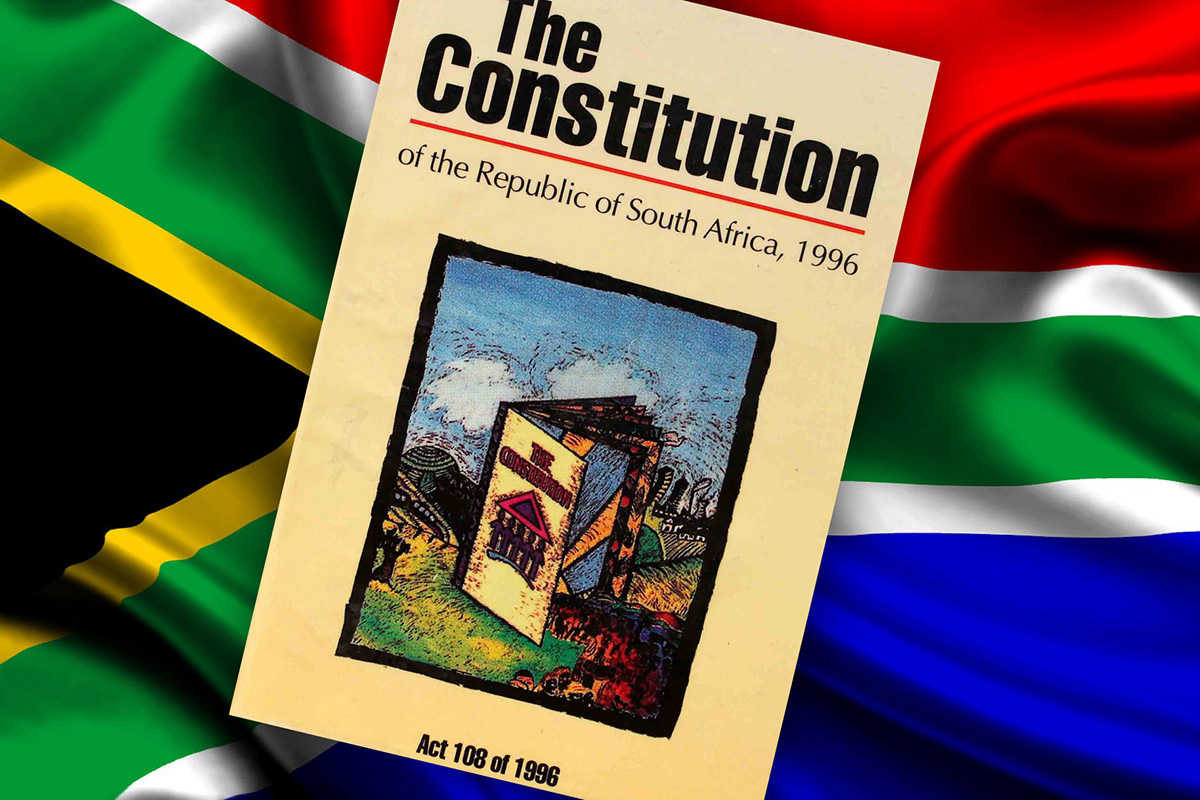
We are told that apartheid ended in 1994, that the Constitution established equality, that everyone is equal before the law and that the institutions of the democratic state are fundamentally different from those that served apartheid. All of this is true in an important legal and constitutional sense.
But there is another question that South Africans have every right to ask:
Has the end of apartheid completely removed the racial attitudes, institutional habits and inequalities that shaped South Africa’s justice system for generations?
The answer cannot simply be “yes” because the Constitution says everyone is equal.
The recent legal battle involving Economic Freedom Fighters leader Julius Malema has once again forced this uncomfortable question into the national conversation. Malema was convicted over the 2018 firing of a firearm at an EFF rally in Mdantsane and was sentenced in April 2026 to five years’ direct imprisonment for unlawful possession of a firearm, with additional sentences and fines for related offences. The National Prosecuting Authority welcomed the sentence as evidence that nobody is above the law.
But Malema has appealed, and in September 2026 the Eastern Cape High Court granted him leave to appeal his firearm conviction.
That fact alone should make South Africans cautious about treating the original judgment as the final and unquestionable word.
But there is a bigger issue here.
It is not simply Julius Malema.
It is the question of whether South Africa has genuinely transformed the institutions that once operated within a brutally racial society.
A democratic Constitution cannot automatically erase an apartheid mindset
The South African judiciary today is constitutionally independent and substantially more representative than it was under apartheid. That progress must be acknowledged.
In 1994, according to the Department of Justice, the judiciary consisted overwhelmingly of white men. In 2026, government reported that approximately half of superior-court judges are African, with significant representation of Coloured and Indian judges as well. The magistracy has also undergone major demographic transformation.
That is significant.
But transformation is not merely about changing the colour of the people sitting behind the bench.
The Department of Justice itself has previously acknowledged that judicial transformation involves values, mindsets, institutional architecture, jurisprudence and access to justice, not merely demographics.
This distinction is crucial.
A black judge can operate within an institution whose procedures, traditions and assumptions were inherited from a historically unequal system. A black prosecutor can work within an institution whose organisational culture developed during another political era. A black lawyer can practise in a profession still shaped by unequal access to resources.
Transformation therefore cannot end with statistics.
The deeper question is whether the mentality of the institution has changed.
The painful history of South African law
South Africans should never forget what the law once looked like.
Under apartheid, law was not merely used to punish criminals. Law itself was one of the principal instruments through which racial domination was organised.
Pass laws restricted the movement of black people. Land laws facilitated racial dispossession. Political laws criminalised resistance. The security apparatus used courts and legislation to suppress opponents of apartheid.
The legal system was therefore not an innocent spectator to apartheid.
The democratic state itself has acknowledged this history. A government report submitted in the context of racial discrimination recognised that lawmakers and the judiciary had been complicit in maintaining apartheid and stated that transforming the judiciary was essential to restoring the legitimacy of the justice system.
That history matters because institutions develop cultures.
You cannot spend generations building an institution within a racial hierarchy and then assume that changing the Constitution overnight will instantly eliminate every institutional consequence of that history.
The Constitution can change the rules.
It takes much longer to change institutions.
Why Malema’s supporters see something bigger than one court case
This is where Julius Malema becomes politically significant.
Malema has deliberately positioned himself as one of the most uncompromising voices challenging South Africa’s racial and economic status quo. His political language is often provocative. His attacks on established institutions are frequently fierce. His politics are deeply controversial.
But precisely because he occupies such a confrontational political position, his encounters with state institutions inevitably become politically charged.
When Malema is prosecuted, convicted and sentenced, his supporters do not necessarily see only an ordinary criminal case.
Some see a much older struggle: a black political movement confronting institutions that, in their historical memory, were once used to control black political expression.
Whether that interpretation is ultimately justified in this particular case is another question.
But it should not simply be mocked or dismissed.
The psychological legacy of apartheid is real.
For millions of South Africans, institutions such as the police, courts and government departments were once not symbols of protection. They were symbols of authority imposed upon them.
That history does not disappear because the national flag changed.
But accusations of racism must also meet a standard of evidence
There is an equally important warning.
It is dangerous to declare that every prosecution of a black politician is racist.
Malema’s political status does not place him above the law. If the evidence establishes that he unlawfully possessed or discharged a firearm, then the courts are entitled—and indeed obligated—to apply the law.
The NPA has explicitly presented the prosecution as an affirmation of equality before the law, arguing that Malema’s political position should not exempt him from criminal accountability.
That principle is correct.
The real question is therefore not whether Malema should be treated as untouchable.
He should not.
The question is whether every South African is treated with the same seriousness, consistency and procedural fairness.
That is a much harder question.
Where institutional racism can hide
Institutional racism does not necessarily require a judge to use a racial slur.
It can be far more subtle.
It can exist in assumptions about credibility.
It can exist in sentencing disparities.
It can exist in policing priorities.
It can exist in prosecutorial discretion.
It can exist in access to expensive legal representation.
It can exist in whose language is understood easily in court and whose language is treated as a complication.
It can exist in which communities have functioning courts nearby and which communities must travel enormous distances to obtain justice.
It can exist through socioeconomic inequality that follows racial lines.
This is why the argument that “there are now black judges, therefore racism is finished” is far too simplistic.
Representation matters.
But institutional culture matters too.
Access to justice matters.
Consistency matters.
Public confidence matters.
And the lived experience of ordinary citizens matters.
Malema’s appeal is therefore important
The fact that Malema has been granted leave to appeal should be welcomed—not because Malema is necessarily right, but because appeals are one of the mechanisms through which constitutional democracies correct mistakes.
A lower court decision should never become sacred.
Judges are human beings.
Magistrates are human beings.
Prosecutors are human beings.
Lawyers are human beings.
And human beings can make mistakes.
The appeal process exists because the justice system itself recognises this possibility.
In September 2026, the Eastern Cape High Court granted Malema leave to appeal his conviction. That means the legal argument will receive further scrutiny.
South Africans should therefore resist the temptation to prejudge the final outcome.
If the conviction survives appeal, Malema and his supporters will have to confront that legal reality.
If the conviction is overturned, the justice system will have to confront an equally important reality: that the original court may have been wrong.
Either way, the law must be allowed to work.
The greater danger is selective outrage
South Africa’s political culture has developed a serious problem: people often defend institutions when those institutions produce outcomes they like and attack them when they produce outcomes they dislike.
That is dangerous.
The ANC should not defend the judiciary merely when it benefits the ANC.
The EFF should not defend the judiciary only when it rules in the EFF’s favour.
The DA should not defend the judiciary selectively.
Civil society should not demand judicial independence only when politically convenient.
And ordinary citizens should not be expected to trust courts blindly.
The principle must be simple:
We defend judicial independence precisely because we demand judicial accountability.
Those two ideas are not opposites.
A genuinely independent judiciary must be strong enough to withstand political pressure—and confident enough to withstand legitimate criticism.
South Africa cannot afford a judiciary that is merely formally non-racial
This is perhaps the most uncomfortable part of the debate.
South Africa has made undeniable progress in transforming the racial composition of its judiciary. Government figures show how dramatically the bench has changed since 1994.
But the country must be brave enough to ask whether demographic transformation has translated into transformation of institutional culture.
Does the ordinary black South African feel that the court system belongs to them?
Does a poor rural citizen experience the same justice as a wealthy corporate executive?
Does a person who cannot afford an expensive legal team have the same practical ability to defend their rights?
Does the legal system communicate effectively with citizens in their own languages?
Do sentencing practices produce outcomes that South Africans regard as consistent?
Do law-enforcement agencies pursue politically connected individuals with the same determination as they pursue ordinary citizens?
These questions are not attacks on the judiciary.
They are questions that a healthy democracy should welcome.
The judiciary must not become politically untouchable
There is an understandable fear in South Africa that political attacks on judges can damage the rule of law.
That fear is legitimate.
Politicians should not intimidate judges.
They should not threaten courts.
They should not encourage supporters to disregard lawful judgments.
But there is another danger: creating a culture in which judges are treated as beyond criticism.
That would also be unhealthy.
Courts exercise enormous power over people’s lives. They can imprison citizens, remove property rights, determine constitutional disputes and constrain government.
Power must always be accompanied by accountability.
Judicial independence means judges must be protected from improper interference.
It does not mean that judgments cannot be criticised, analysed, challenged or appealed.
Malema’s critics are entitled to say that his conduct should be punished if the law was broken.
Malema’s supporters are entitled to question the judgment.
The final answer should come from evidence and law—not from whichever political faction shouts the loudest.
The uncomfortable truth about racism in post-apartheid South Africa
The uncomfortable truth is that racism did not disappear in 1994.
Nor did inequality.
Nor did institutional memory.
Nor did economic power suddenly become racially neutral.
South Africa changed its political system, but it did not magically reconstruct society overnight.
This is why accusations of institutional racism must neither be automatically accepted nor automatically dismissed.
They must be investigated.
If evidence shows racial discrimination, it must be confronted.
If evidence does not support the allegation, that must also be accepted.
That is what constitutionalism requires.
Malema’s case is bigger than Malema
Ultimately, the most important question arising from the Malema case is not whether one politician should go to prison.
It is whether South Africans genuinely believe that justice is blind to race, wealth and political power.
That belief cannot be demanded.
It must be earned.
A justice system earns legitimacy when citizens see that powerful people can be prosecuted, ordinary people can defend themselves, victims can obtain justice and accused persons receive fair trials.
It earns legitimacy when mistakes are corrected.
It earns legitimacy when judges explain their decisions clearly.
It earns legitimacy when institutions confront their own historical failures.
And it earns legitimacy when a black South African walking into a courtroom does not feel that they are entering an institution that was built for somebody else.
South Africa has made enormous progress since 1994. Pretending otherwise would be dishonest.
But pretending that apartheid’s institutional legacy has completely disappeared would be equally dishonest.
The transformation of the judiciary is unfinished.
And Julius Malema’s court battle, whatever its eventual legal outcome, has once again forced South Africa to confront that uncomfortable reality.
The answer cannot be to destroy the courts.
Nor can it be to worship them.
The answer must be to build institutions that are strong enough to hold politicians accountable and transformed enough to command the confidence of the people they serve.
That means defending the rule of law while refusing to become blind to history.
It means defending judicial independence while demanding transparency.
It means accepting legitimate convictions while preserving the right of appeal.
And above all, it means understanding that formal equality is not necessarily the same thing as substantive equality.
South Africa’s Constitution promised a society based on dignity, equality and freedom.
Thirty-two years into democracy, that promise remains a work in progress.
The challenge before the country is therefore not to decide whether Julius Malema is a hero or a villain.
It is to build a justice system in which such political labels become irrelevant.
A justice system where the colour of an accused person’s skin does not determine how the law treats them.
A justice system where wealth does not purchase better justice.
A justice system where political power does not provide immunity.
And a justice system where historical racism is not forgotten simply because the law now uses the language of equality.
That is the judiciary South Africa still has to finish building.